What Size Mandala Wall Art Do You Need? A Simple Size Guide
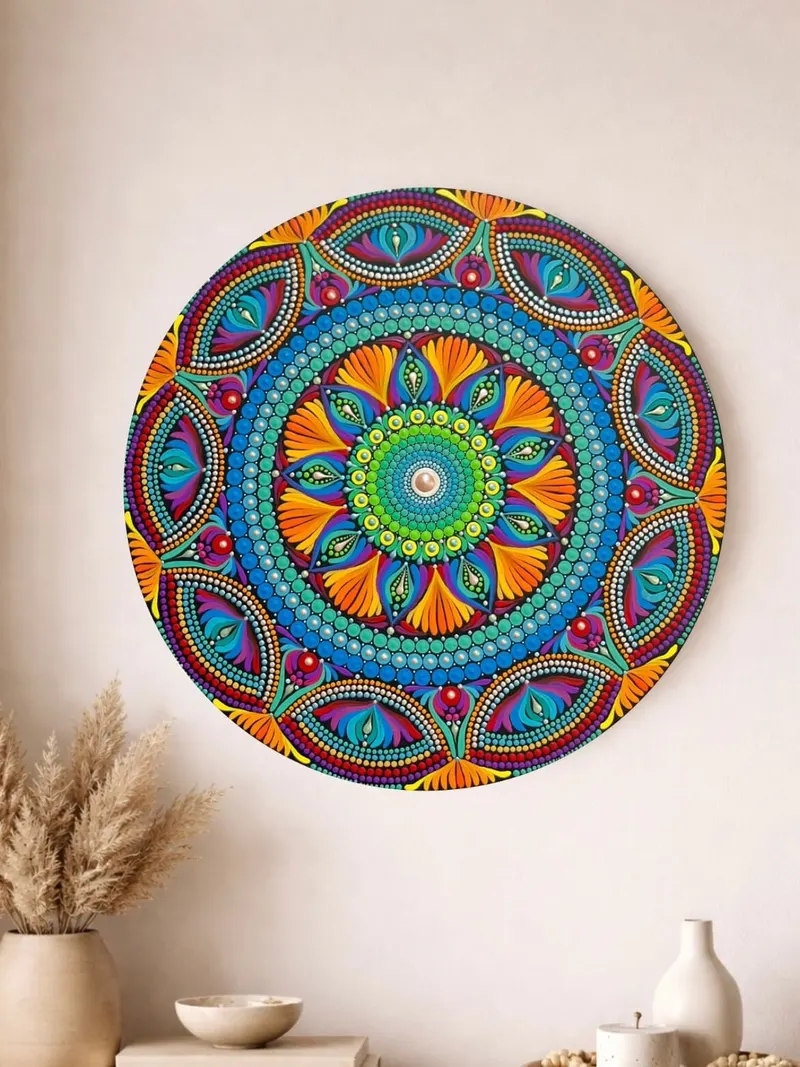
The most common regret with wall art isn’t the colour or the style. It’s the size. A piece that looked generous on screen ends up floating like a postage stamp above a big sofa, or a statement piece overwhelms a narrow hallway. Round art is especially tricky, because our eyes judge circles differently from rectangles.
Here’s how to get it right the first time.
Our Sizes, in Centimetres
Mandala sizes are usually given in inches. Here is what they mean on your wall:
| Size | Diameter | Typical use |
|---|---|---|
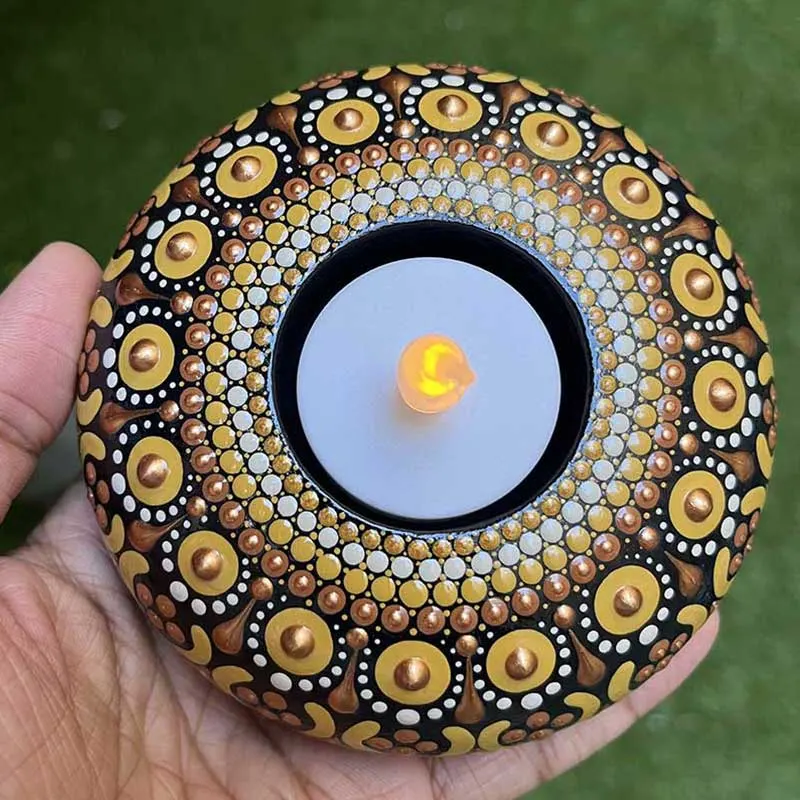
| Mini (20 cm) | 20 cm | Shelves, desks, small nooks, gallery walls |
| 16 inch | 41 cm | Above a console, beside a bed, small walls |
| 18 inch | 46 cm | Above a small sofa, bedroom focal point |
| 24 × 17 inch | 61 × 43 cm | Above a sofa or sideboard |
| 36 inch | 91 cm | Statement wall, studios, large living rooms |
Our 16″ Rainbow Mandala, 18″ Calm Chaos Mandala and the 61 × 43 cm Tree of Life cover the most common walls. Larger sizes, like our 36″ Pritvi, are painted as custom orders.
Rule 1: Two-Thirds of the Furniture
When art hangs above furniture, aim for a width of about two-thirds of the furniture’s width, and never more than the full width.
- Above a 200 cm sofa: around 130–150 cm of art. That’s a row of three 16″ mandalas (about 140 cm with gaps), or a 36″ statement piece flanked by two minis.
- Above a 140 cm sideboard: around 90–100 cm, such as a 36″ piece or a pair of 18″ rounds.
- Above a 90 cm console table: around 60 cm, such as the 61 × 43 cm Tree of Life, or an 18″ mandala with a mini beside it.
Round art reads slightly smaller than a rectangle of the same width, so when in doubt, go one size up.
Rule 2: Leave Breathing Room on Empty Walls
On a wall with no furniture, the art has to hold the space on its own, so go large or group pieces until the arrangement spans a good part of the wall’s width, while still leaving a generous margin at the edges. A lone 16″ mandala on a 4-metre wall will feel lost. A 36″ piece, or a grouping, holds the space.
Rule 3: Hang at Eye Level
The centre of the artwork should be about 145–150 cm from the floor. Above furniture, leave 15–25 cm between the top of the sofa or console and the bottom of the art, so the two read as one composition.
All our wall pieces come with a sawtooth hook on the back (two on the larger boards), so once you’ve marked the height, hanging takes a nail and a minute.
Rule 4: Small Pieces Love Company
Mini mandalas (20 cm) and 16″ pieces shine in groups:
- A trio in a horizontal line above a bed.
- A cluster of different sizes beside a window.
- A vertical pair on a narrow wall between doors.
Keep the gaps between pieces equal, about 8–10 cm, and treat the group as one large artwork when you apply Rule 1.
Rule 5: Match the Room’s Scale and Mood
- Living rooms can take bold sizes and saturated colour.
- Bedrooms suit calmer palettes and mid sizes, such as an 18″ blue or green mandala.
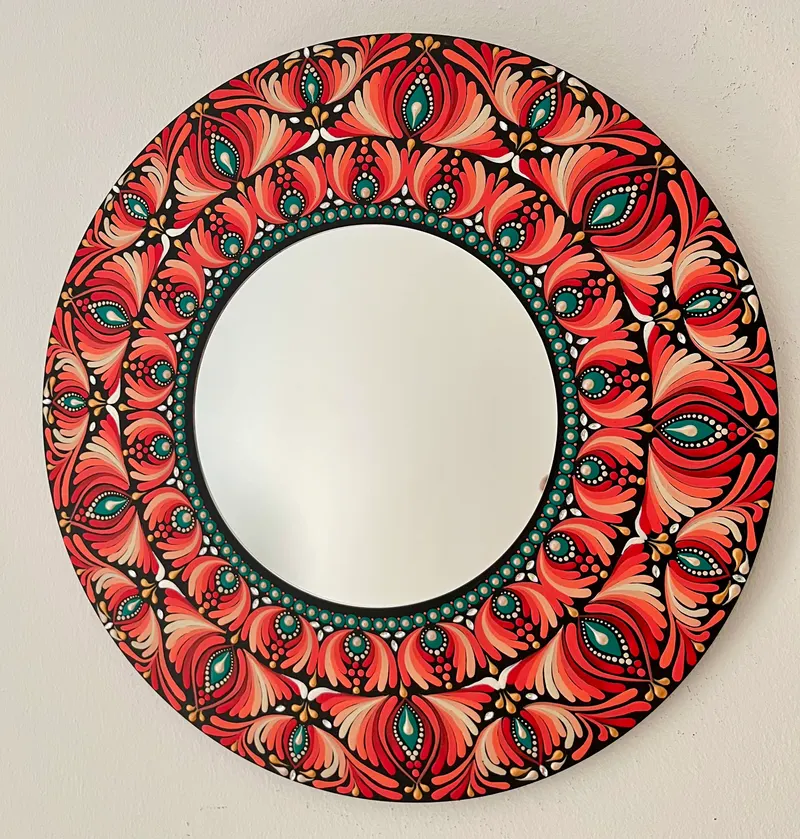
- Entrances benefit from something reflective or bright; a mandala mirror adds light and doubles as a last-look mirror.
- Meditation corners work beautifully with a single piece hung lower, at seated eye level (around 90–110 cm).
Not sure which colours suit which room? Our mandala colour meanings guide explains the symbolism and best rooms for each colour family.
The Easiest Way to Check: See It on Your Wall
Paper templates taped to the wall work, but there’s a faster way. Our free wall preview tool lets you upload a photo of your wall, tell it how wide the wall is (or measure against a door or sofa), and place any of our wall pieces on it at real size. You can drag the piece around, compare sizes and download the picture to share with whoever you live with. Your photo never leaves your device.
Still Between Two Sizes?
Choose the larger one. It’s a common piece of interior design advice for good reason: art that is slightly too small is a far more common mistake than art that is too big. And if none of our standard sizes is right, we can paint one to fit.
Love what you're reading?
Explore handcrafted mandala art made with intention — or commission something uniquely yours.